Minimal intervention key to preserving authenticity of historical sites, expert says
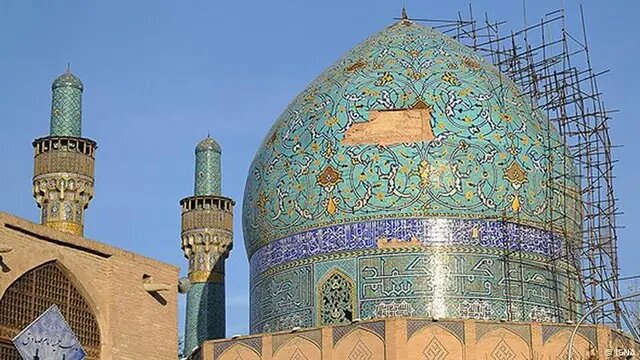
TEHRAN – An Iranian conservation expert has called for a shift toward minimal intervention in the restoration of historical structures, warning that recent war-related damage to heritage sites requires urgent and carefully planned responses.
Javid Imanian, a specialist in the restoration of historic buildings and urban fabrics, on Saturday said that maintaining the authenticity of cultural heritage must remain central to all restoration efforts, particularly as more than 140 historical sites across Iran have been damaged by US and Israeli airstrikes since Feb. 28.
Speaking to Mehr news agency, Imanian outlined the current state of restoration practices, highlighting both evolving approaches and persistent challenges in the field.
He said that a recent event to commemorate the International Day for Monuments and Sites offered an opportunity to underscore the goals of the International Council on Monuments and Sites (ICOMOS), including raising awareness, strengthening conservation efforts, and reinforcing the link between heritage and identity.
“This occasion can help improve public understanding of the importance of protecting cultural heritage, historical buildings, and archaeological sites,” he said, adding that awareness is a necessary first step toward the restoration and revival of damaged monuments.
Imanian noted that advances in technical knowledge and resources have influenced restoration methods in recent years. However, he expressed concern that some projects, including those involving nationally and internationally recognized sites, have involved excessive intervention that undermines conservation principles.
“Proper restoration is carried out with minimal intervention and the least possible alteration, so that a historical structure or fabric does not lose its original authenticity,” he said, calling for a fundamental shift in restoration practices.
Referring to the northern province of Golestan as an example, Imanian said that local climatic conditions and architectural typologies require specialized construction techniques and materials. Traditional elements such as clay roof tiles and timber sourced from forested areas are integral to historic buildings but are increasingly difficult to obtain.
“This creates challenges both in sourcing materials and in making accurate technical assessments during restoration,” he said.
Imanian identified three main categories of damage affecting historical structures in Golestan: natural factors, human activities, and non-expert interventions. He said natural factors, such as weathering and environmental conditions, remain the leading cause of deterioration, followed by human impact and unprofessional restoration work.
He added that the sector faces several structural challenges, including limited funding, shortages of traditional materials, and a lack of skilled professionals. These gaps extend to both academic experts and traditional craftsmen, whose knowledge is essential for authentic restoration.
“To overcome these issues, it is necessary to secure sufficient funding, establish workshops for producing traditional materials, recruit specialists, and train craftsmen through apprenticeship systems,” he said.
Addressing damage caused during what he described as a recent phase of conflict, Imanian said war-related destruction differs significantly from gradual deterioration caused by natural or human factors.
“In wartime conditions, parts of structures and architectural decorations can be destroyed suddenly,” he said. “This requires immediate actions such as emergency stabilization and the preparation of precise restoration plans.”
He said Iran possesses much of the technical expertise needed to restore damaged sites, but emphasized the need for coordinated planning to establish and activate restoration workshops nationwide. In some cases, he added, international expertise could also be utilized.
Imanian concluded by stressing the importance of public education in safeguarding cultural heritage.
“The most important issue in protecting cultural heritage is education and raising public awareness,” he said. “The more people and officials understand the value of heritage, the greater their participation in its preservation will be.”
He recommended strengthening educational programs within the cultural heritage sector through continuous and practical initiatives, saying such efforts would contribute to more effective protection and restoration of historical assets.
AM
Leave a Comment